 Loren Lippincott
Recently Gov. Jim Pillen has been touring the state and stopping at the homes of legislators to discuss his plan for property tax reform to be discussed in the upcoming legislative summer session. Although there will be numerous other bills introduced by senators in an attempt to bring about property tax relief, all will attempt to broaden the overall tax base in order to lighten the load on property owners.
A big part of the problem has been the growth of state spending in the past few years. Consider that in 1985 the total revenues coming into local county treasurer’s offices from property taxes totaled $1 billion statewide. By 2022 that number had grown to $5 billion and it’s on track to be $6 billion by 2026. Property tax collections are increasing at a rate of $1 million a day partly due to increased land values and inflation, but increased spending also plays a part.
Approximately two-thirds of your local property taxes go to fund public schools. The other third funds other local services.
We cannot–and should not– point fingers of blame at county commissioners, school boards, law enforcement agencies and certainly not at our county assessors as though they were out of control. These folks are doing their best to provide quality services at a competitive price.
However, like those of us on the Legislature’s Appropriations Committee (charged with spending all of that $5 billion+ in revenue) it is imperative to have the ability and a reason to say no to spending.
With that in mind Gov. Pillen has suggested placing a hard cap on property tax collection growth of zero percent (or consumer price index). This would prevent the spike of 10-15 percent sometimes seen in property tax rates.
Additionally he proposes that the only way to override that hard cap would be a vote of the local taxpayers. His plan also includes an exemption from the cap for public safety and law enforcement. These provisions would give local government officials a reason to say no to unnecessary increased spending.
In 2023, school districts collected around $3 billion in property taxes. The governor’s plan would require the state to fund the salaries of those who instruct the students, since teacher salaries make up 80 percent of the average school budget. Meanwhile, local taxpayers cover the other expenses such as buildings and physical assets which make up the other 20 percent of the budget.
In addition, three current taxing programs would remain in place including voter-approved bond issues, the Special Building Tax and the Qualified Capital Purpose Undertaking Tax. The governor’s plan would phase in an elimination of the local tax levy over three years. Currently the 2023 levy is $1.05, which is the maximum allowed. Under his plan the 2024 levy would lower to $0.15, the 2025 levy would go down to $0.075 and 2026 levy would be zero. This would leave the state to pay $2.1 billion instead of this amount currently being paid locally by property owners.
Some will claim we already have existing property tax relief programs to cover a portion of school taxes and indeed we do! However, more than half of those qualified to claim those benefits did not file those claims, mostly because the process for applying is much too complicated.
Meanwhile, more than $3.6 billion in individual and corporate income taxes were collected in 2023. In addition, $2.3 billion came in from sales and use taxes and $5.3 billion from property taxes. The governor’s plan eliminates the revenues from property taxes and replaces them by taxing 114 items that currently are not taxed. (I have not seen this list.) The governor believes this will produce an additional $950 million in state revenues. Additionally, taxes on items currently taxed at rates much less than our neighboring states, will increase. Those items include cigarettes, candy, pop, vaping supplies, alcoholic spirits, keno gambling, games of skill and consumable hemp. The governor believes this will generate over $200 million in property tax relief when fully implemented. By adding together that estimated $950 million with the $200 million the governor hopes to come up with $1.15 billion to chip away at that $5.3 billion of property taxes. I look forward to seeing how this will reduce our property taxes by 50 percent!
It must be remembered that under our present tax system 40 percent of Nebraskans do not pay income or property taxes.
Removing a large part of the property tax burden and placing it on consumables and services spreads the tax burden and base.
This is the right thing to do, because as I always say, the government should not penalize productivity, but should promote productivity. This plan is already getting a lot of special interest push back from lobbying groups and certain citizens, and you can expect much more outcry in the days ahead. This is to be expected since I have found during my time in office there is surprising resistance to any form of change.
I do applaud Gov. Pillen for his courage in pushing against the status quo which is never easy!
With the summer session quickly approaching I look forward to hearing the many ideas on how to best change our tax code to substantially lower property taxes. Unfortunately in this world taxes are a necessary evil that will always be with us.
As Benjamin Franklin has been so famously quoted as saying, “...in this world nothing can be said to be certain, except death and taxes.” However, as leaders we must do our best to make sure that the tax burden is spread out as equitably as possible and it is my pledge to do my best to help make that happen. I also promise to do my best to keep you in the loop on these ideas and changes to our tax laws.
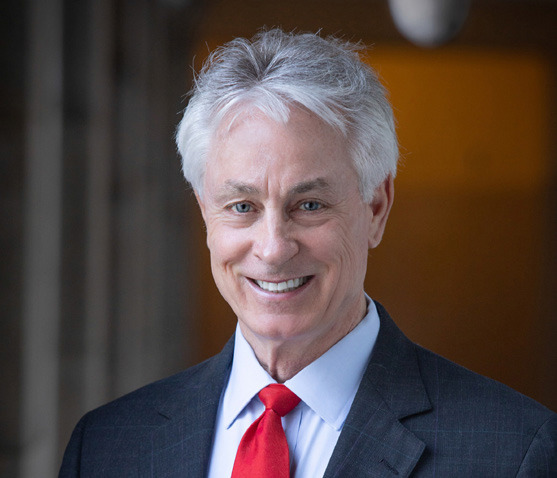
Loren Lippincott represents Legislative District 34 in the Nebraska State Senate. Read his column in the Nance County Journal.