 Loren Lippincott
We’ve been waiting months since the close of the Unicameral’s 2024 legislative session and now we have an answer. Gov. Jim Pillen has announced the special session of the Nebraska Legislature to tackle lowering property taxes will convene on Thursday, July 25 in Lincoln. A daunting challenge looms before me and my fellow senators from across the state—how to lower property taxes without unfairly shifting the tax burden to others?
Property taxes are gathered locally to pay for local services and about two-thirds of those revenues are used to pay for your local public schools. In 2022 $5 billion was collected statewide in property taxes. The governor wants to lower property taxes by 40 percent, which would mean replacing $2 billion of property tax revenues with money found elsewhere to fund local schools.
Currently the school funding formula is called TEEOSA, which stands for Tax Equity and Educational Opportunity Support Act. TEEOSA was enacted in our state in 1990 and has been amended numerous times since.
Unfortunately over the years it has devolved more and more into shifting the burden for school funding onto property owners.
It should be remembered that 40 percent of Nebraskans do not pay any property or income taxes, yet they send their kids (or grandkids) to government run schools, drive on government built and maintained roads, depend on government paid law enforcement protection and enjoy the benefits of hundreds of other services provided through property and income taxes.
One solution that has been suggested is for K-12 teachers to become employees of the state, paid directly by the state, rather than locally from property taxes.
The legislature would then be required each year to allocate money for their salaries. The question then is where would the approximately $2 billion come from to do that?
Whether or not the above proposal is a viable solution remains to be seen, but what is certain is that teacher salaries and benefits do make up a huge part of a local school’s budget—approximately 80 percent. (Only 4.7 percent goes to pay administrators.) And there are more school staff members today than ever before! Over the last 30 years the number of teachers and health professionals employed by local schools has increased 39 percent, with much of the increase being due to higher numbers of special needs students. I have asked the reason for this in nearly every education forum I have attended in recent years and I have never received a clear answer, except that it seems to have multiple causes on multiple fronts. The obvious influences of social media, poor diets, lack of exercise and the family breakdown have had a negative impact on our youth and overall society.
Getting back to our tax discussion, presently Nebraska does not tax for a slew of items that our neighboring states do collect taxes for. And on the items we do tax, those taxes are much lower than surrounding states.
So what will be the formula for raising that additional $2 billion? Well, a team of a dozen people have been working on answering that question for more than two months and their formula will soon be revealed.
The obvious question is whether that broadened tax base will add up to the $2 billion needed when the burden is shifted away from property tax payers. What is inarguable, however, is that the current status quo of penalizing the productivity of land owners is wrong. For example, the average price of a home in Nebraska is about $200,000, but the annual property tax on that home is $3,200. That’s $1,100 higher than the national average of $2,100! The Cornhusker State has the fourth highest local property tax burden in the entire U.S.A. This must be corrected!
Education is an expensive business and here in Nebraska 42 percent of the entire state budget goes to educate students in public schools all the way from elementary school through our trade schools and universities.
When you couple education costs with state-funded Medicaid (17 percent of the budget) those two programs alone total 59 percent of your state budget! Agriculture makes up 20 percent of our state’s economy and provides 25 percent of our state’s jobs so we must be careful not to continue to heap the burden of paying for education on the backs of those putting food on our tables.
Meanwhile, there are thousands of elderly individuals across Nebraska who have worked hard to build our state’s economy into what it is today but are now in danger of being taxed out of their own homes.
We must not continue to place the undue burden of funding education on those making a living in agriculture or those who own their homes! Taxes should be paid by all! If you benefit from government services, you should be helping pay for those services. Government should not be in the business of taking money out of the pockets of those who have been responsible and wise stewards of their resources and putting it in the pockets of others who are not pulling their weight.
Increasingly, our government seems to think its business is to redistribute wealth from the haves to the have-nots, but as Thomas Sowell has wisely said, “The history of the 20th century is full of examples of countries that set out to redistribute wealth and ended up re-distributing poverty.”
It’s anybody’s guess what will be the outcome when the legislature concludes its special session (the first since 2021), and it will be fascinating to see what’s inside the governor’s plan for accomplishing the goal of cutting property taxes. But one thing is certain—it won’t be easy! With that in mind, I ask for your prayers for my colleagues and me as we wrestle through these important issues.
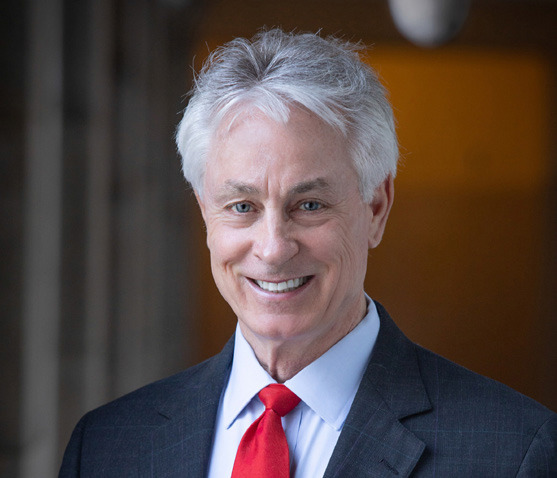
Loren Lippincott represents Legislative District 34 in the Nebraska State Senate. Read his column in the Nance County Journal.