
 Loren Lippincott
This year I have introduced in the Legislature LB 550, which empowers parents by giving them a stronger voice in their children’s education while equipping schools with additional resources to support student success. The bill provides for Released Time Religious Instruction (RTRI), wherein each school district would adopt a policy for excusing students to attend a released time religious course for one class period per week. RTRI would cost the school nothing and all study would be off school grounds. All transportation would be provided by the parents or sponsoring entity. Written parental permission would be required for a student to attend.
The objective of this program is to support families who seek religious education for their children while strengthening character education in our public schools and fostering a wellrounded and inclusive learning environment for every student.
Presently 27 states have RTRI and three other states have similar regulations in place. This includes our neighbors in South Dakota and Iowa as well as the deep blue states of California and New York. This idea truly transcends political boundaries!
Those fearing such a policy might result in a legal liability for local schools can rest easy. The constitutionality of RTRI was affirmed by the U.S. Supreme Court in 1952 in the case of Zorach v. Clauson. At that time the court ruled such programs do not violate the Constitution’s Establishment Clause as long as they are voluntary, held off campus and do not use public funding. LB 550 complies with those requirements.
Our schools currently provide a wide breadth of elective courses and this would simply be an elective course in character development, morality and work ethic. States that already have RTRI have seen a marked improvement in academic performance and a decrease in behavioral issues. Schools that offer RTRI agree by an overwhelming majority that the school and the students both benefit from this program. Reports show involvement in the program improves student behavior. Additionally, there is a positive impact on a student’s decision making and relationship building skills. Overall, RTRI has shown to have a positive impact on the outlook, attitude and motivation of students enrolled in the program. Furthermore, the safety and security of the students would mirror that of the school. Those who would be instructing the classes during RTRI would be subject to background screenings and RTRI instructors would be required to report attendance to the school. Since the program is voluntary, parents would be able to withdraw their children at any time for any reason.
Student transportation to and from the off-campus instruction would not be the responsibility of the school, but would be provided by the entity giving the coursework. Class size would generally be the same size as a normal school classroom – 10-25 students. Additionally, a school may choose to give grade credit for this program at its discretion!
Each lesson would focus on one character trait, such as gratitude, humility or perseverance, and students would not be missing out on mandatory and core curriculum courses. RTRI classes would be held during the school day so as not to conflict with extracurricular activities typically held before or after school.
American Public Schools have a lot of challenges. Nationwide, 58 percent of kids come from broken homes. America is currently in last place academically among the industrialized countries, yet we are in first place in spending on education. That decline began in the 1920s when the so-called “Father of Modern Education” John Dewey, a self-proclaimed atheist, and others moved education away from student-centered learning to an educational philosophy based on social policy. The former emphasis on individualism was abandoned and replaced with education techniques that fostered a herd mentality. But as Albert Einstein said, “Education is not the learning of facts, but the training of minds to think.”
America desperately needs to recover the educational philosophy of men like Einstein and Noah Webster who was known as “School Master to America.” He said, “To give children a good education in manners, arts, and science is important; to give them a religious education is indispensable; and an immense responsibility rests on parents and guardians who neglect these duties.”
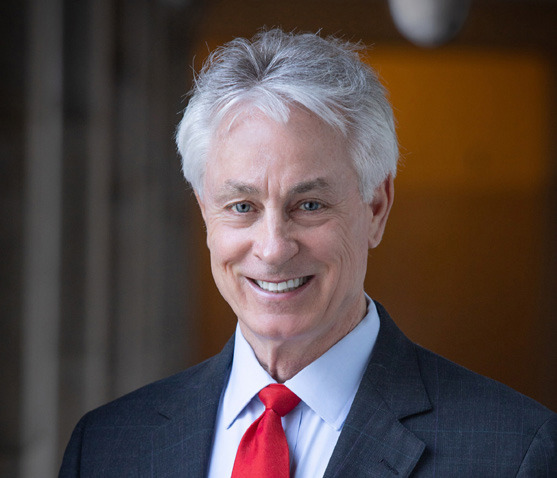
Loren Lippincott represents Legislative District 34 in the Nebraska State Senate. Read his column in the Nance County Journal.