
 Deb Fischer
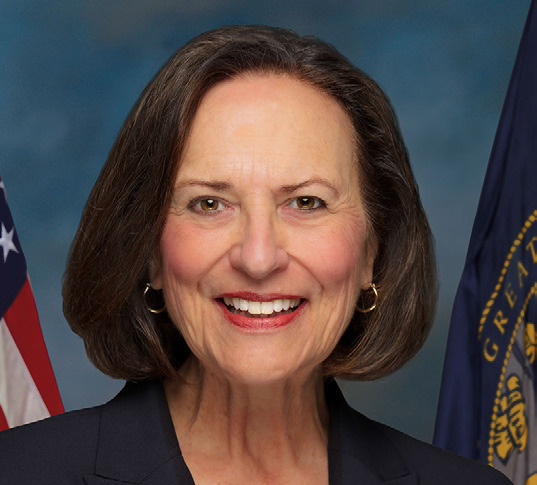
When Nebraskans sent me to the U.S. Senate, I sought to serve on committees that address important matters back home, and I was able to secure a seat on the powerful Commerce Committee. It has one of the broadest portfolios, including communications, transportation, weather, science, space, technology, and more.
I was particularly interested in this committee after chairing the Transportation and Telecommunications Committee in the Nebraska Unicameral. Representing a rural district, I spent a lot of time trying to get better internet service out to our rural communities. My husband Bruce and I raised our family on a cattle ranch south of Valentine, so I know how frustrating it can be to secure a solid, reliable internet connection.
Today, I chair the Senate Commerce Committee’s Telecommunications and Media Subcommittee. And this week, I held a hearing on something that is changing fast: artificial intelligence, or AI, and what it means for our phone and internet networks.
But why does this matter to Nebraska? It matters because Nebraska is home to dozens of industries that are adopting AI into their business operations. This includes precision agriculture, manufacturing, logistics and freight, health care, banking, and public safety. None of these industries work well without a strong, fast internet connection.
I invited Dan Watermeier, a commissioner on the Nebraska Public Service Commission, to testify before our committee. He made an important point: AI technology is only useful for the average citizen if they have access to broadband connectivity. It is essential that we fund broadband buildout — if not, this technology won’t be available for all who need it.
In addition to expanding broadband access, we also need stronger networks in unserved and underserved communities. The more advanced the technology is, the more bandwidth it needs. That is a serious problem in rural areas already struggling to connect to the internet.
Another salient point made by the witnesses who testified in front of our committee was that AI urgently needs fiber connectivity. Many technologies — such as satellite, cable, and wireless — play an important role in delivering broadband to Americans. Still, we need the resiliency of fiberoptic networks and their capacity to deliver the higher speeds necessary to power AI.
All of these considerations were factors in why I introduced my Linking Access to Spur Technology for Agriculture Connectivity in Rural Environments (LAST ACRE) Act. Right now, federal broadband programs through the U.S. Department of Agriculture mostly focus on connecting homes and businesses — but not always the farmland and ranchland in between. My bill would help close that gap, so connectivity reaches the actual fields and pastures where the work happens. I am proud that my LAST ACRE Act has been included in the Senate’s version of the Farm Bill, and I am eager to get this important legislation passed.
Harnessing the full potential of AI for businesses, government, and everyday Americans requires building more and better telecommunications infrastructure. But aside from the technicality and logistics, we must remember why our networks need to be prepared for AI.
First, we cannot afford to fall behind in developing better networks than our adversaries. Other countries are racing ahead in building faster, more secure networks. America should be the frontrunner in this race.
Second, Nebraska has a lot to gain from AI. Our farms and ranches are already using connective technology to boost productivity. Our rural hospitals depend on resilient and secure communications networks to reach patients in remote areas. Our manufacturers rely on sensors and automation to keep their operations running smoothly. AI systems accelerate all of this.
As more of these industries adopt AI into their workflows, the demand on our networks is only going to grow. Strong internet infrastructure is what makes this possible.
I was glad to bring attention to this issue at this hearing, and I’ll keep working to make sure every community — rural, suburban, and urban — has the connectivity it needs to benefit from this cutting-edge technology.
Thank you for participating in the democratic process. I look forward to visiting again with you next week.
Deb Fischer represents Nebraska in the United States Senate. Read her column in the Nance County Journal.